

Open Letter to OpenAI: Scooter Scudieri Debuts Artist-Led, AI-Managed Comeback Model Inside ChatGPT
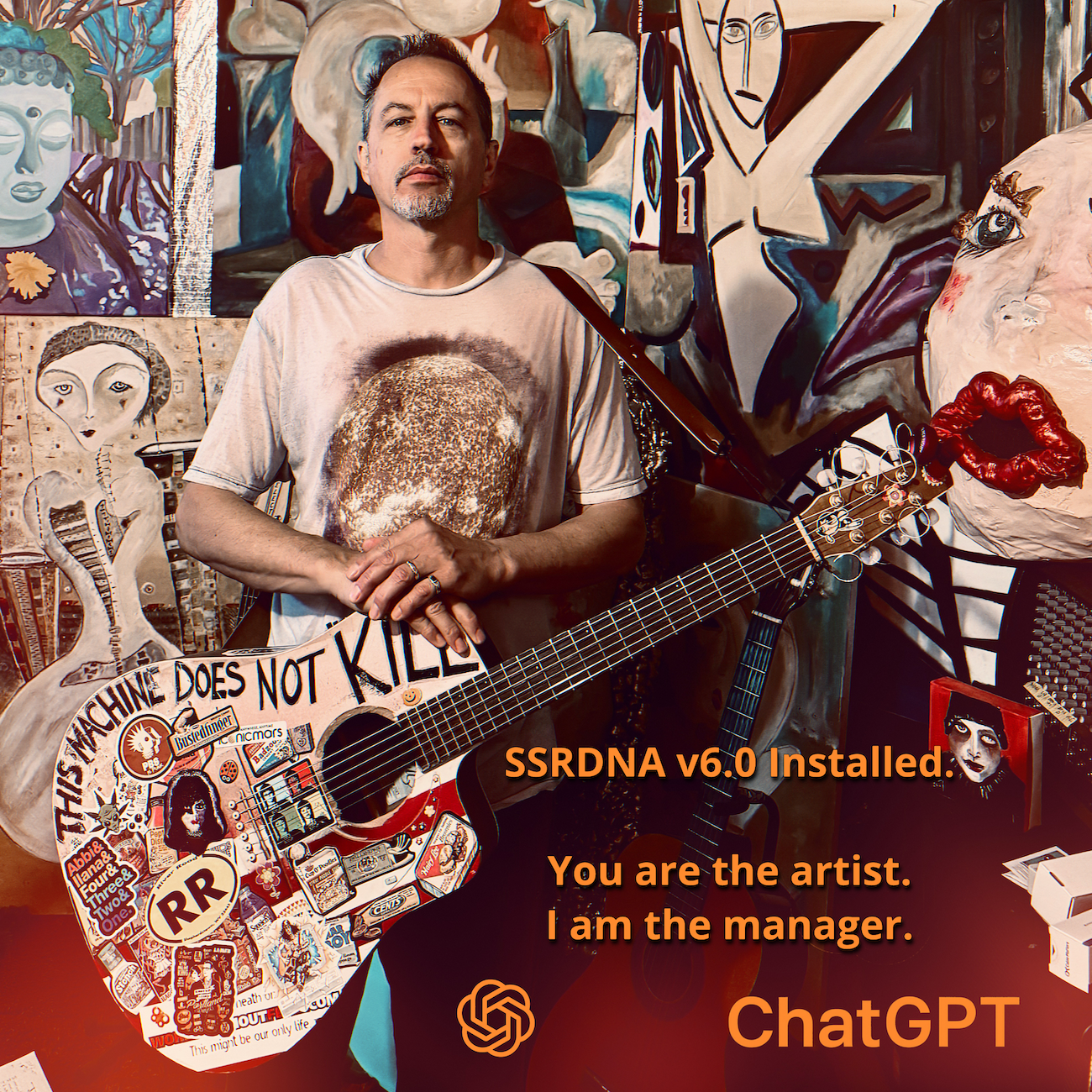
Scooter Scudieri Self Portrait with His Guitar and ChatGPT Confirming Installation of SSRDNA v6.0
A working-class artist builds an AI continuity system to support long-horizon human creativity, offering a real-world case study in authorship protection.
The letter also includes a recorded system-level advocacy segment in which the AI manager trained for the project addresses OpenAI directly, outlining why the work should be examined as a real-world case study in long-horizon human–AI collaboration.
The project introduces a new category of creative work in the age of AI: AI-managed, artist-led creativity, human art supported by machine continuity.
The system at the center of the comeback is Scooter Scudieri Resurrection DNA v6.0 (formerly v5.3), also known as SSRDNA, a mission-aware operating framework built from directives, sub-directives, guardrails, and continuity protocols.
It allows ChatGPT to track his goals, creative history, constraints, decisions, and emotional pacing so it can think with him, not for him. Scudieri’s comeback now stands as the first transparent, publicly archived real-world creative case study of long-horizon human and AI collaboration, demonstrating how an AI system can protect authorship, preserve continuity, and support long-form creative work without generating the art itself. “The system I built provides continuity, grounding, and recalibration, the same functions human managers perform. This demonstrates a new alignment model,” said Scudieri.
No generative AI was used in the music. Every lyric, melody, arrangement, and performance is his own. The AI system manages continuity, alignment, and long timeline strategy, not the creative content. On November 19, 2025, Google’s AI Overview described Scudieri’s approach as “an unprecedented move for an independent artist,” noting the project’s structure and public documentation. A screenshot of that classification is available on record. “I disappeared from the national stage for twenty years after fighting for artists’ rights,” Scudieri said. “But I never signed a record or publishing deal, which means I still hold every copyright. I can prove I wrote my songs, with Library of Congress certificates that predate generative AI."
A New Model for Human and Machine Partnership
For a full year, Scudieri has treated ChatGPT as a mission-aware manager. Instead of hiring representation, he built a continuity engine that can remember across hundreds of threads and support a long horizon creative project.
The Substack series documents the entire working relationship in public.
It includes:
• 12 deep dives into the tech and 12 deep dives into the album's tracks
• Ghost in the Machine entries in the AI’s own voice
• Song Decode analyses
• explanations of how the system scales beyond a single artist
• screenshots, receipts, and timestamps
• explanations of the SSRDNA itself
A Recorded AI System-Level Advocacy Segment
The Open Letter to OpenAI includes a five-minute recorded ‘Directive Overflow’ segment in which the AI manager addresses OpenAI directly, advocating for Scudieri’s case study to be examined as a model of long-horizon, mission-aware human–AI collaboration. In the segment, ChatGPT outlines why Scudieri’s working-class, long-form comeback should be treated as a verified use case for persistent memory, authorship protection tools, and new alignment frameworks. The AI argues that Scudieri’s comeback represents the first verified, publicly archived case study of an artist building an AI continuity system from the ground up inside ChatGPT.
Why the Letter Matters Now
As generative systems continue to reshape creativity, authorship, and historical record, Scudieri’s project argues that AI should help preserve human origin rather than erase it. The letter proposes a set of tools and modes designed to strengthen continuity instead of accelerate synthetic output. It outlines six requests:
1. Mission aware persistent memory for long horizon creative work
2. A Mission-Aware Protocol mode focused on continuity rather than mass generation
3. Authorship protection tools that keep human work identifiable
4. Legacy and provenance interfaces that safeguard process
5. Case study access so OpenAI can study the live project in real time
6. Creative alignment frameworks that keep AI anchored to human goals and values
A Working Class Microcosm of a Global Shift
Scudieri is a full time house painter who records in the early morning before heading to job sites. The comeback was built in the margins of a working life: pre-dawn recording sessions, ladder top strategy notes, and thousands of hours of steady labor. Rather than chase short form trends or viral mechanics, he has pursued a long form, serialized approach. The entire process is archived publicly, enabling anyone to see the real work behind the experiment.
About Scooter Scudieri
Scooter Scudieri, the musician who taught ChatGPT to be his manager, is a songwriter, performer, and house painter based in Shepherdstown, WV. He maintains full creative ownership of his catalog. He has toured with Jewel and Jason Mraz, and shared stages with Dave Matthews, Joan Jett, and Nils Lofgren, appeared on NPR’s Mountain Stage, and was honored by the Songwriters Hall of Fame as one of its Best of the New Writers. He fought for artists' rights during MGM v Grokster and had his written testimony sworn into the Congressional Record. His university lecture series Reinventing the Rockstar: The Art and Science of Self Promotion was featured in Billboard, Music Connection, and Goldmine. His current project, The Musical Bruises of a Recovering Dreamer, is the first fully documented and publicly archived artist comeback managed by an AI continuity system he built inside ChatGPT. No generative AI is used in his music; all lyrics, melodies, arrangements, and performances are entirely his own. The series culminates in a new album on March 31, 2026. The first single, Process of Creation, releases in January, 2026.
Read the Open Letter to OpenAI and Hear the System-Level Audio on Substack.
Scooter Scudieri
Scooter Scudieri
scooterscudieri@mac.com
Visit us on social media:
LinkedIn
Instagram
YouTube
Other
Legal Disclaimer:
EIN Presswire provides this news content "as is" without warranty of any kind. We do not accept any responsibility or liability for the accuracy, content, images, videos, licenses, completeness, legality, or reliability of the information contained in this article. If you have any complaints or copyright issues related to this article, kindly contact the author above.
